

What causes hair loss in women?
Before choosing a treatment for female hair loss, I recommend finding out why the shedding or thinning is happening. Female hair loss can follow pregnancy, surgery or a significant illness. It can also relate to alopecia areata, chemotherapy, medication, hormonal imbalance, iron or vitamin deficiency, or conditions such as diabetes or lupus.
Female pattern hair loss has a different appearance from typical male pattern baldness. It often creates diffuse thinning across the top of the head, with a wider part and more visible scalp, while the frontal hairline is usually maintained. However, similar-looking thinning can have a different cause, so it should not be assumed to be female pattern hair loss without appropriate assessment.
For suspected female pattern hair loss, blood tests should be arranged to help exclude other diseases, metabolic conditions and hormone imbalances. A physician or dermatologist can advise on the investigations and medical options that are appropriate for you. Treating the underlying cause matters, particularly when shedding may be temporary or related to a health condition.
Which medical treatments may be considered?
Medical treatment varies according to the diagnosis. A healthcare professional may discuss approaches such as topical minoxidil for some women, nutritional support where a deficiency is identified, or management of a hormonal or inflammatory condition. Minoxidil offers limited help for some cases of female pattern hair loss, and medicines used for male pattern baldness do not provide clinical benefit for most women.
Hair may also recover naturally after some episodes of telogen effluvium, such as shedding after pregnancy, an operation or major illness. That is one reason I would not rush into a cosmetic camouflage procedure while active shedding is unexplained. Your treatment plan should reflect whether the hair loss is temporary, progressive, patchy or associated with scarring.
If you are already using a medical treatment, tell me during consultation. Female density SMP can sometimes be considered alongside ongoing hair loss care, but it does not alter the hair growth cycle or treat the condition causing the thinning.
How can female density SMP help?
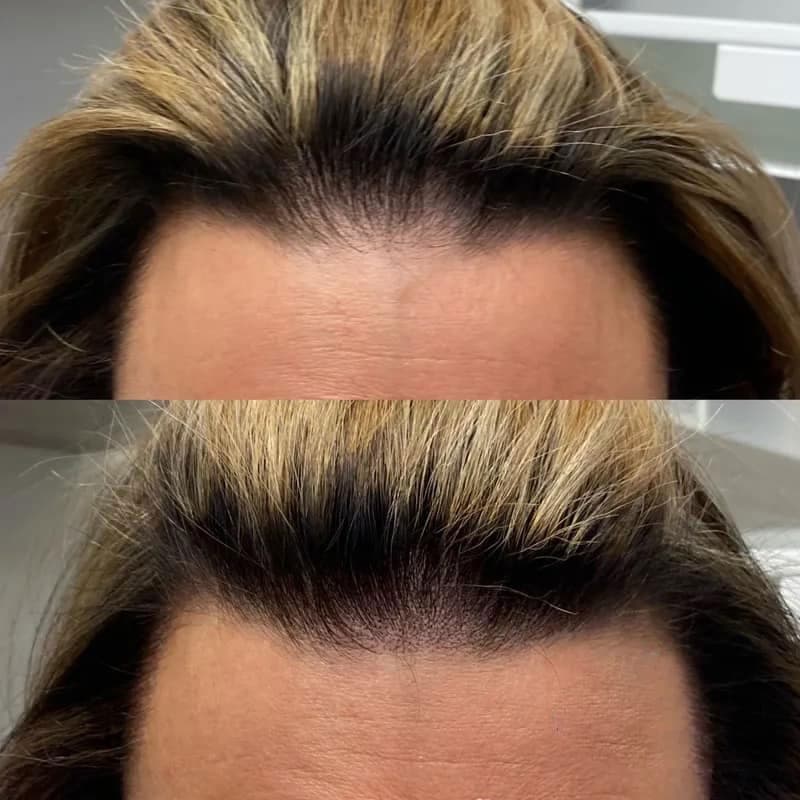
Female density scalp micropigmentation, or SMP, is a cosmetic camouflage treatment for women with visible scalp show-through. I place very small pigment deposits between existing hairs, matching them to the current hair color. This reduces the contrast between the scalp and hair, so the part, crown or diffuse thinning can look visually fuller.
The treatment does not grow hair, stop hair loss or damage existing follicles. Your own hair remains in place and continues to grow normally. Unlike a shaved-style treatment, female density work is designed for unshaved hair. Your length stays as it is, allowing the natural hair to conceal the tiny deposits.
The result should look like reduced scalp visibility, not a solidly painted scalp. Some scalp showing through the hair remains normal. This approach may suit women with female pattern hair loss, some types of alopecia, chemotherapy-related loss or scalp scarring, provided the scalp is suitable for treatment.
You can read more about scalp micropigmentation for women and how the service is planned around female hair patterns.
| Question | Medical treatment | Female density SMP |
|---|---|---|
| What it does | Varies according to the diagnosis | Reduces the contrast between the scalp and hair so thinning can look visually fuller |
| Effect on hair growth | Minoxidil offers limited help for some cases of female pattern hair loss | Does not grow hair, stop hair loss or damage existing follicles |
| Effect on the cause | Can include management of a hormonal or inflammatory condition | Does not alter the hair growth cycle or treat the condition causing the thinning |
| Can they be used together? | Tell me about any current treatment during consultation | Can sometimes be considered alongside ongoing hair loss care |
What happens during a female density treatment?
At consultation, I assess your scalp, existing hair, skin condition, hair color, treatment area and expectations. We discuss whether the goal is to soften a widening part, reduce crown contrast or add visual density through a larger area. I also ask about medical history, medication, allergies and any current hair loss treatment.
A complete treatment usually involves several appointments, with the exact number depending on the area, density and how your skin holds pigment. The first session establishes a lighter foundation with wider dot spacing. Later sessions can add density and detail gradually rather than making the result too strong at once. Healing time is allowed between appointments so the color and spacing can be assessed properly.
SMP layers tiny dots of pigment into the upper dermis. It is not microblading, which creates hair-like lines for brows.
Who may not be ready for SMP?
I would postpone treatment if you have an active scalp infection, acne, eczema or a psoriasis flare-up. Anyone with a history of keloid or spontaneous keloid scarring should speak with a dermatologist before considering SMP, because tattooing trauma can trigger abnormal scarring. I also need to know about immune-compromising conditions, diabetes, blood-thinning medication and allergies.
I also explain that results are not permanent, because the pigment gradually fades over time. Clients with scarring alopecia may need touch-up sessions within a few years.
After each session, keep the scalp dry and avoid heavy exercise, hot showers, steam rooms, sweating and direct sun exposure for the period I advise. After the final treatment, avoid swimming, saunas and steam rooms for the healing period we discuss. Once healed, use SPF and follow the aftercare instructions I provide.
For more detail about density work, see my guide to SMP for women’s thinning hair. Rebel Aesthetic is based in Philadelphia, Pennsylvania, and I discuss suitability, expectations and pricing during consultation.
If you notice fever, pus or drainage, severe pain, severe redness or swelling after treatment, contact a healthcare provider. For other healing concerns, contact your artist promptly rather than picking or interfering with the area.
You are welcome to book a consultation if you would like to talk through your hair loss and whether female density SMP is appropriate.
Frequently asked questions
Can female hair loss grow back on its own?
Sometimes. Shedding after pregnancy, surgery, major illness, or certain medications may improve as the trigger settles. Other conditions, including female pattern hair loss and some scarring alopecias, may persist. The outlook depends on the cause, so unexplained or sudden loss deserves medical assessment before cosmetic treatment.
Can SMP make my hair grow back?
No. Female density SMP is visual camouflage, not a hair growth treatment. It places pigment between existing hairs to reduce the contrast of visible scalp. It does not stimulate follicles, change the hair growth cycle, or stop the underlying condition causing thinning.
Will women need to shave their hair for density SMP?
Usually, female density SMP is designed for unshaved hair. Pigment is placed between existing strands, so your natural length remains and helps conceal the work. The treatment area and hair pattern still need careful assessment because the technique differs from creating a shaved-head appearance.
How long does female density SMP last?
SMP is intended to be long-lasting, but visible color gradually softens. Sun exposure, skin aging, cellular turnover, and individual skin characteristics affect longevity. Many clients consider maintenance after several years, although timing varies. I discuss realistic expectations and future touch-ups before treatment.
Does female density SMP hurt?
Sensation varies, but SMP is generally less uncomfortable than a traditional body tattoo. Numbing helps with comfort. The scalp can feel tender or warm afterward, and redness may settle over the following days. Your consultation should cover comfort, sensitivity, and relevant medical history.
Can SMP be used for alopecia areata?
It may be considered for some women with alopecia areata, depending on whether the condition is active, the scalp is healthy, and the pattern of loss is suitable. SMP does not treat the immune condition or prevent future patches. Medical advice and a scalp assessment are important before booking.
Will people be able to see the pigment between my hairs?
The aim is for deposits to blend with existing hair and reduce visible scalp, rather than create an obvious painted effect. Results depend on pigment matching, dot size, spacing, hair color, density, and practitioner skill. Some scalp visibility remains normal for natural-looking density work.